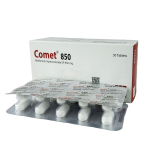
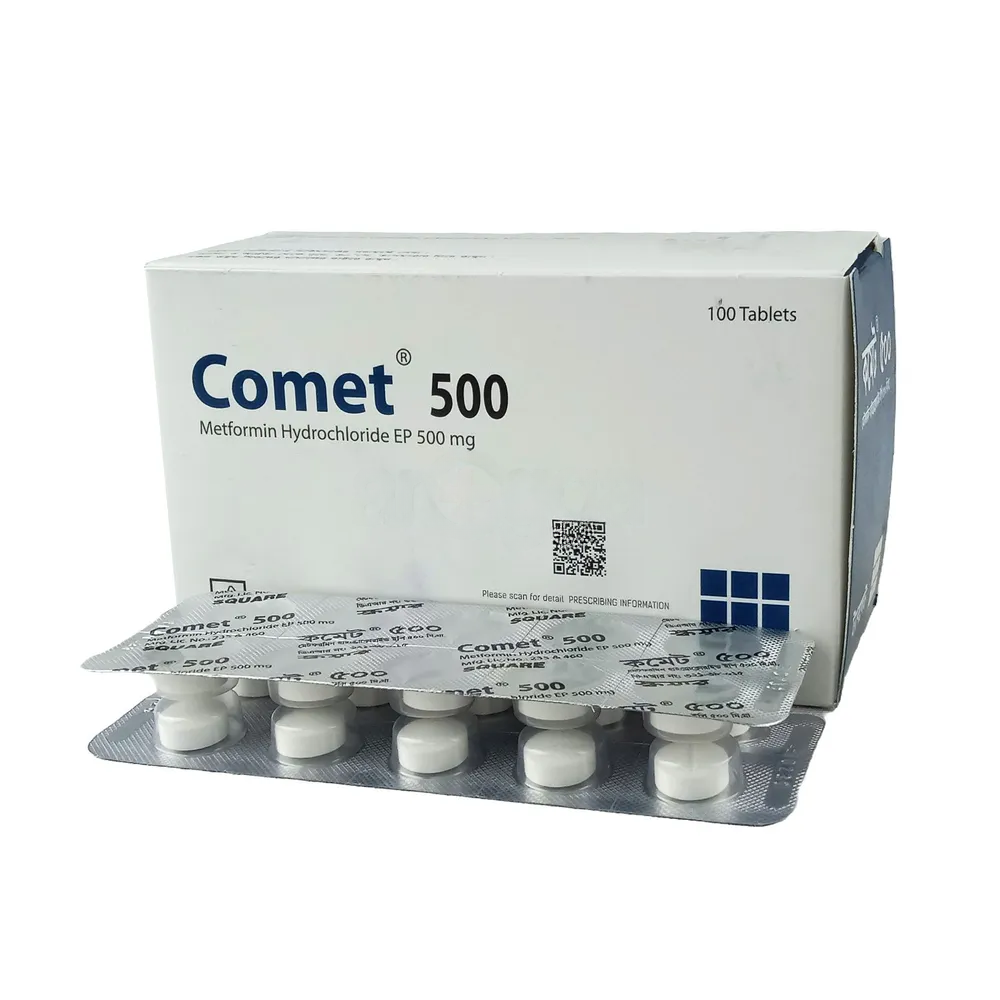
Comet 500 mg is a biguanide-class oral antihyperglycemic agent and the most prescribed antidiabetic drug worldwide. Its pharmacological profile is distinct from all other antidiabetic drug classes — it lowers blood glucose through insulin-sensitizing mechanisms rather than by increasing insulin secretion, meaning it does not cause hypoglycemia when used as monotherapy.
Mechanism of Action
Metformin lowers both fasting (basal) and postprandial plasma glucose through three primary complementary mechanisms:
1. Reduction of Hepatic Glucose Production (Primary Action)
The dominant mechanism of Metformin action is the inhibition of hepatic gluconeogenesis (the synthesis of new glucose from non-glucose precursors such as lactate, amino acids, and glycerol). Metformin achieves this primarily by:
- Inhibiting mitochondrial complex I of the electron transport chain in hepatocytes, which reduces hepatic ATP production and raises the AMP:ATP ratio
- This activates AMP-activated protein kinase (AMPK) — a key cellular energy-sensing enzyme — and inhibits fructose-1,6-bisphosphatase (a rate-limiting gluconeogenesis enzyme), together suppressing hepatic glucose output
- The result is a significant reduction in fasting plasma glucose, with typical HbA1c lowering of 1–2%
2. Improvement of Peripheral Insulin Sensitivity
Metformin improves insulin sensitivity in peripheral tissues — primarily skeletal muscle — by:
- Activating AMPK, which stimulates GLUT4 glucose transporter translocation to the cell surface, increasing glucose uptake into muscle cells
- Enhancing post-receptor insulin signaling pathways
- This effect is particularly important for reducing postprandial blood glucose levels
3. Reduction of Intestinal Glucose Absorption
Metformin reduces the rate of gastrointestinal glucose absorption, contributing to lower postprandial blood glucose peaks. This mechanism also stimulates intestinal GLP-1 secretion, which may partially explain Metformin’s modest additional benefits on satiety and weight.
Key Pharmacological Distinctions
- No insulin secretagogue activity — Metformin does not stimulate insulin release from pancreatic beta cells, which is why it does not cause hypoglycemia when used as monotherapy
- Weight neutral or modest weight reduction — unlike sulfonylureas and insulin, Metformin does not cause weight gain; it typically reduces weight by 1–3 kg, making it particularly suitable for overweight and obese patients
- Cardioprotective effects — beyond glycemic control, Metformin has been shown to reduce LDL cholesterol, improve endothelial function, reduce platelet aggregation, and lower cardiovascular mortality in type 2 diabetic patients
Pharmacokinetics
- Absorption: Metformin is absorbed primarily from the small intestine. Oral bioavailability is approximately 50–60% of an oral dose. Absorption is relatively slow — peak plasma concentrations (Cmax) are reached in approximately 2 to 3 hours for immediate-release tablets. Food reduces and delays absorption — taking with meals is recommended to improve GI tolerability while having minimal effect on overall glycemic efficacy.
- Distribution: Metformin does not bind to plasma proteins. It has a large volume of distribution and is distributed throughout body fluids and accumulates in intestinal cells, salivary glands, and red blood cells. Tissue concentrations (particularly in the gut, liver, and muscle) substantially exceed plasma concentrations.
- Metabolism: Metformin is not metabolized in humans — it is excreted unchanged. This is a major pharmacokinetic advantage: no hepatic drug interactions through CYP enzyme pathways, and no active or toxic metabolites.
- Half-life: Plasma half-life is approximately 4 to 8 hours. The blood half-life (red blood cell residence) is approximately 17.6 hours — explaining why the drug accumulates in red blood cells.
- Elimination: Excreted entirely unchanged by the kidney, primarily via active renal tubular secretion (by organic cation transporters OCT1, OCT2, MATE1, and MATE2). Approximately 90% of absorbed Metformin is eliminated renally within 24 hours. This complete renal dependence for elimination is critical — renal impairment leads to Metformin accumulation and increased lactic acidosis risk





 Pick up from the Woodmart Store
 Courier delivery
 DHL Courier delivery
 Warranty 1 year
 Free 30-Day returns



